
Understand two distinct citizenship requirements, how absences can matter and where USCIS explains filing eligibility.
Two concepts that are often confused
Continuous residence and physical presence are different requirements for many applicants for naturalization. Continuous residence generally concerns maintaining the required residence in the United States over the applicable period. Physical presence generally concerns the time the applicant was actually inside the country.
USCIS analyzes both under the governing eligibility pathway. Satisfying a physical-presence amount does not necessarily establish continuous residence, and maintaining a home in the United States does not automatically prove physical presence.
General residence-based naturalization routes
Many lawful permanent residents apply under the general five-year route, while certain qualifying spouses of U.S. citizens may apply under a different three-year framework. Both involve additional rules beyond the length of time shown on a Green Card.
The categories can have different physical-presence thresholds, and exemptions or special statutory provisions may apply. Do not rely on a generic formula without checking the relevant section of the current Form N-400 instructions.
Continuous residence versus physical presence
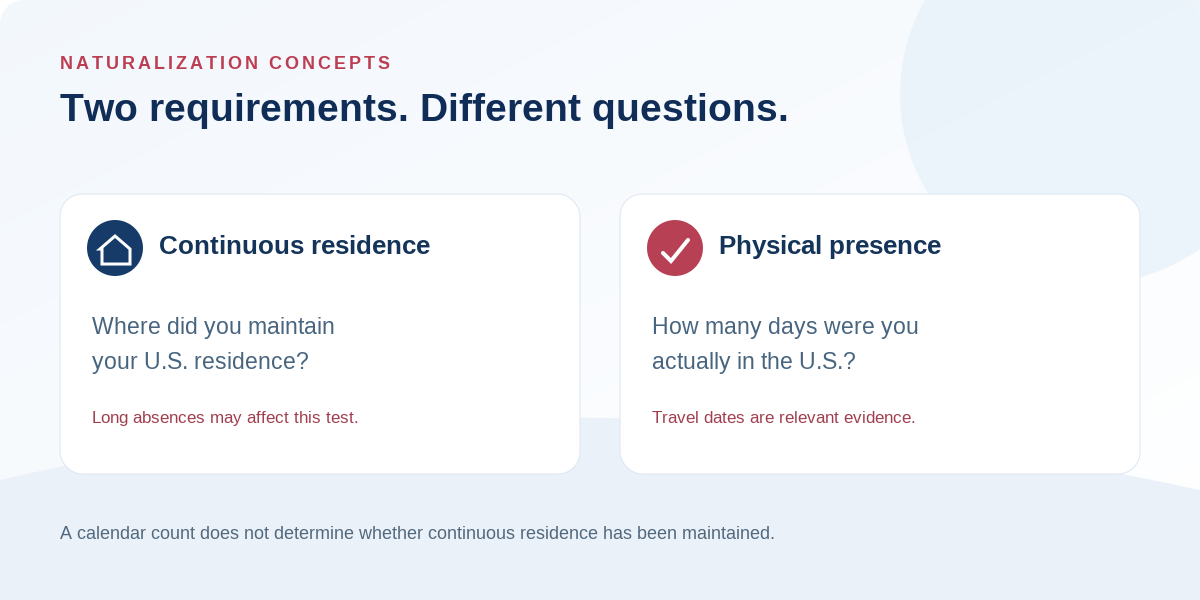
Do not confuse these requirements
| Requirement | Question it helps answer | What a calendar cannot decide |
|---|---|---|
| Continuous residence | Did the applicant maintain the required residence over the statutory period? | Whether a particular absence legally interrupted residence. |
| Physical presence | How many qualifying days was the applicant physically within the United States? | Whether all exceptions and evidentiary rules have been met. |
Both may be relevant to naturalization and require separate USCIS analysis.
Organize your international travel dates
Count calendar days abroad and view a simple breakdown. This does not determine naturalization eligibility.
How trips abroad can affect continuous residence
USCIS examines absences from the United States under specific rules. For example, certain longer absences may raise a rebuttable presumption that continuous residence was interrupted, while still longer absences can create different consequences or exceptions.
The result depends on the duration and facts of the trip as well as any applicable exception. A single brief trip ordinarily raises different questions from prolonged travel or a pattern suggesting that residence moved abroad.
What counts toward physical presence
Physical presence focuses on time actually spent in the United States during the relevant statutory period. Applicants are generally expected to report travel accurately and may need to reconstruct dates from passports, travel records and other sources.
USCIS may ask questions about the travel history at the naturalization interview. An inaccurate count can lead to filing problems; the agency's official instructions control how any special provision is applied.
Preserving residence in particular circumstances
USCIS describes narrowly defined processes and legal provisions that may preserve residence for naturalization during certain qualified employment abroad. A qualifying application, such as Form N-470 in appropriate circumstances, has its own eligibility conditions.
These provisions do not apply merely because a permanent resident worked remotely or spent time overseas. Read the requirements carefully and obtain qualified guidance before relying on an exception.
Before filing Form N-400
Compare the intended eligibility basis with USCIS instructions, review travel dates and consider any unusually long absence. Also assess all other naturalization conditions, including good moral character and applicable testing requirements.
The purpose of this page is to explain legal concepts, not to calculate an individual's earliest safe filing date. An exact assessment may require documents and legal review.
Steps to review
Use this sequence to organize research. The official agency instructions, not this checklist, control filing requirements.
- 01Identify the N-400 eligibility provision
Confirm whether the general pathway, spouse pathway or a special provision applies.
- 02Reconstruct international travel dates
Review passports, admission records and other reliable documents.
- 03Evaluate continuous residence separately
Check USCIS rules on absences and possible interruptions.
- 04Review physical-presence requirements
Use the exact threshold relevant to the statutory eligibility basis.
- 05Check any exceptional circumstances
Special employment, military or other provisions are fact-specific.
Frequently asked questions
Are continuous residence and physical presence the same?
No. They are distinct statutory requirements and both may need to be met.
Does owning a home in the United States satisfy physical presence?
Not by itself. Physical presence concerns actual presence in the country.
Can a long trip abroad affect naturalization?
Yes. Certain extended absences can affect continuous residence, and all relevant travel can affect physical-presence calculations. Consult USCIS guidance for the specific circumstances.
Educational information, not legal advice. Immigration laws, agency policies, form editions and deadlines can change. This article does not determine your eligibility. For an individual legal matter, seek help from a qualified U.S. immigration attorney or accredited representative.
Official sources & further reading
Check these original government pages for current instructions, dates and requirements.
- USCIS — Form N-400 and Current Instructions
- USCIS — Citizenship and Naturalization
- USCIS — Citizenship: What to Expect
Agency reference pages and core concepts were checked on November 23, 2026. This does not indicate review or approval by a licensed attorney.