
Understand how naturalization works, from lawful permanent residence and Form N-400 to the USCIS interview, testing and oath ceremony.
What naturalization means
Naturalization is the legal process through which eligible noncitizens become U.S. citizens. It differs from acquiring citizenship automatically through birth or through a qualifying parent, which may be governed by separate rules.
An applicant must qualify under a specific statutory route. The commonly discussed residence-based paths do not describe every exception or special provision.
The typical permanent resident eligibility routes
Many naturalization applicants use a general pathway involving at least five years as a lawful permanent resident. Some qualifying spouses of U.S. citizens may be eligible under a three-year pathway with additional requirements.
Meeting a time period alone is not sufficient. Age, residence, physical presence, good moral character, attachment to constitutional principles and other rules must be assessed under the actual eligibility basis. Special exceptions exist.
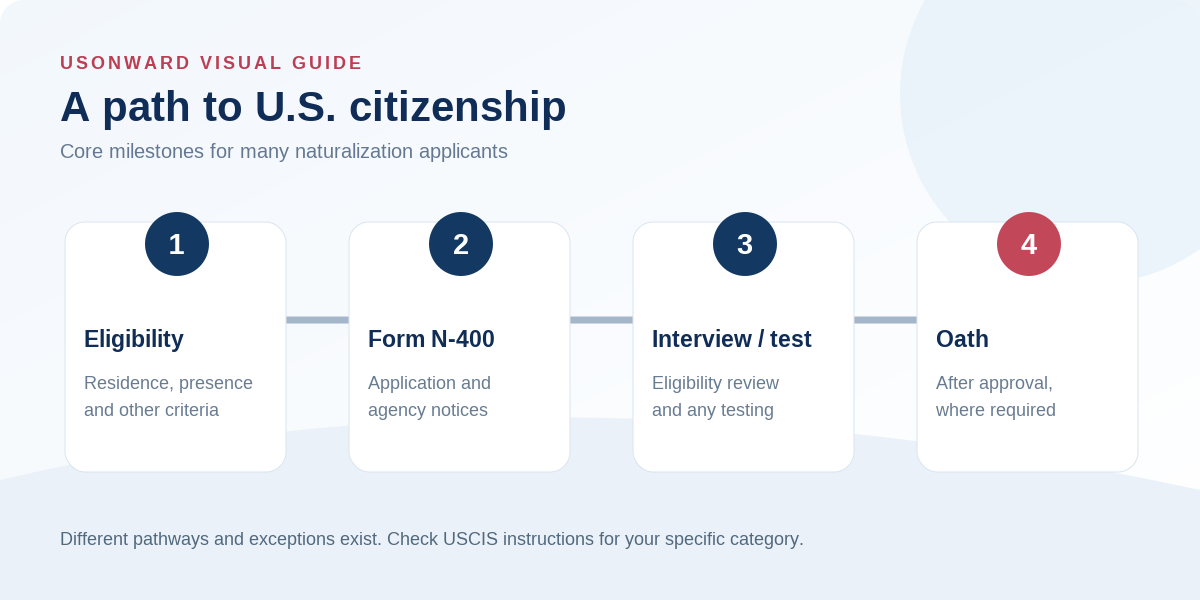
The naturalization process at a glance
Preparing for the naturalization interview
A U.S. Citizenship and Immigration Services video introducing the interview and testing process. The applicable civics test version and policy requirements may have changed since it was published.
Continuous residence and physical presence
These are legally distinct requirements. Continuous residence involves maintenance of the qualifying residence period, while physical presence concerns time actually spent in the United States during the relevant period.
International trips can raise different issues depending on duration and circumstances. Do not assume that possessing a Green Card or a U.S. home answers every residence question.
Applying with Form N-400
Many applicants use Form N-400 to seek naturalization. The official form and instructions identify documentation, filing options, fees and applicable eligibility bases.
Some eligible applicants may be allowed to file within a defined early filing window before completing the full residence period, but eligibility and exceptions must be confirmed on the current USCIS instructions. USCIS form editions and fees may change.
Biometrics, interview and testing
USCIS may require biometrics and typically schedules an interview to review the application and relevant eligibility questions. English and civics testing may apply unless an exception or accommodation is available.
USCIS maintains separate study resources and test-version announcements. The applicable civics exam can depend on when Form N-400 was filed; study with the correct official version rather than a mixed or outdated question set.
Decision and oath ceremony
After the application process, USCIS issues a decision under the applicable legal standards. For many successful applicants, taking the Oath of Allegiance at a naturalization ceremony completes the naturalization process.
Approval of a filing, scheduling of an interview and completion of the oath are distinct milestones. Read the actual USCIS notices for any additional actions or required documents.
If a case is complicated
Arrests, extended travel, tax issues, selective service requirements, previous immigration filings and other circumstances can raise specific legal questions. This guide cannot resolve those facts.
For personal advice or potential eligibility concerns, consult an appropriately licensed U.S. immigration lawyer or accredited representative and the official USCIS policy resources.
Steps to review
Use this sequence to organize research. The official agency instructions, not this checklist, control filing requirements.
- 01Determine your eligibility basis
Identify the general five-year pathway, qualifying spouse pathway or another provision.
- 02Review residence, physical presence and travel history
Use official USCIS instructions for the precise requirements.
- 03Read the current N-400 edition and fee guidance
Check evidence requirements and applicable online or paper filing procedures.
- 04Prepare for interview and the correct test version
Use USCIS study materials and test updates.
- 05Follow notices through to the oath
Citizenship is not completed merely by filing N-400.
Frequently asked questions
Can someone apply for citizenship immediately after receiving a Green Card?
Usually not under standard residence-based naturalization rules. The applicable eligibility category, residence period and exceptions determine timing.
Does marriage to a U.S. citizen automatically grant citizenship?
No. Some qualifying spouses may have a distinct naturalization route, but it is an application process with specific conditions.
Is N-400 approval the same as completing the oath?
They are different milestones. Many applicants become naturalized citizens after completing the required oath ceremony.
Which civics test version should I study?
Use the USCIS Test Updates guidance and the version applicable to your N-400 filing date.
Educational information, not legal advice. Immigration laws, agency policies, form editions and deadlines can change. This article does not determine your eligibility. For an individual legal matter, seek help from a qualified U.S. immigration attorney or accredited representative.
Official sources & further reading
Check these original government pages for current instructions, dates and requirements.
- USCIS — Learn About Citizenship
- USCIS — Form N-400
- USCIS — What to Expect
- USCIS — Study for the Test
- USCIS — Test Updates
Agency reference pages and core concepts were checked on November 23, 2026. This does not indicate review or approval by a licensed attorney.