
Know the differences between travel documentation, possible abandonment of residence and time outside the country for citizenship purposes.
Permanent residence and international travel
A lawful permanent resident may generally travel outside the United States, subject to applicable documentary and immigration requirements. A Green Card is not U.S. citizenship, and returning after international travel is a separate legal matter.
The kind of document required for travel depends on the circumstances and length of absence. Check current USCIS and Customs and Border Protection information, as well as destination-country entry requirements.
The time abroad can matter
Extended or repeated absences may raise questions about whether a person has continued to make the United States their permanent home. The law considers more than just a single trip duration and the expiration date printed on the card.
A brief return to the United States once a year does not necessarily resolve all questions about residence abandonment. Travel patterns, family, employment and other circumstances may be relevant.
International travel can affect different requirements
Organize your international travel dates
Count calendar days abroad and view a simple breakdown. This does not determine naturalization eligibility.
Green Card, reentry permit and other documents
USCIS provides guidance on using a Permanent Resident Card for return after certain absences and on when a reentry permit may be relevant. A qualifying reentry permit generally involves a separate application, commonly through Form I-131, subject to current rules.
Reentry permits have limits and do not guarantee admission or protect against every finding concerning a person's actual residence. Filing and biometrics may affect travel planning.
Travel and admissibility
Immigration officers at entry apply governing admission rules. Different consequences can arise after long absences, certain criminal histories, or other legal issues. An unexpired card should not be viewed as a guarantee that entry will be straightforward.
Anyone with pending removal proceedings, possible abandonment issues or other complicated circumstances should seek professional legal guidance before departure.
Naturalization has separate travel rules
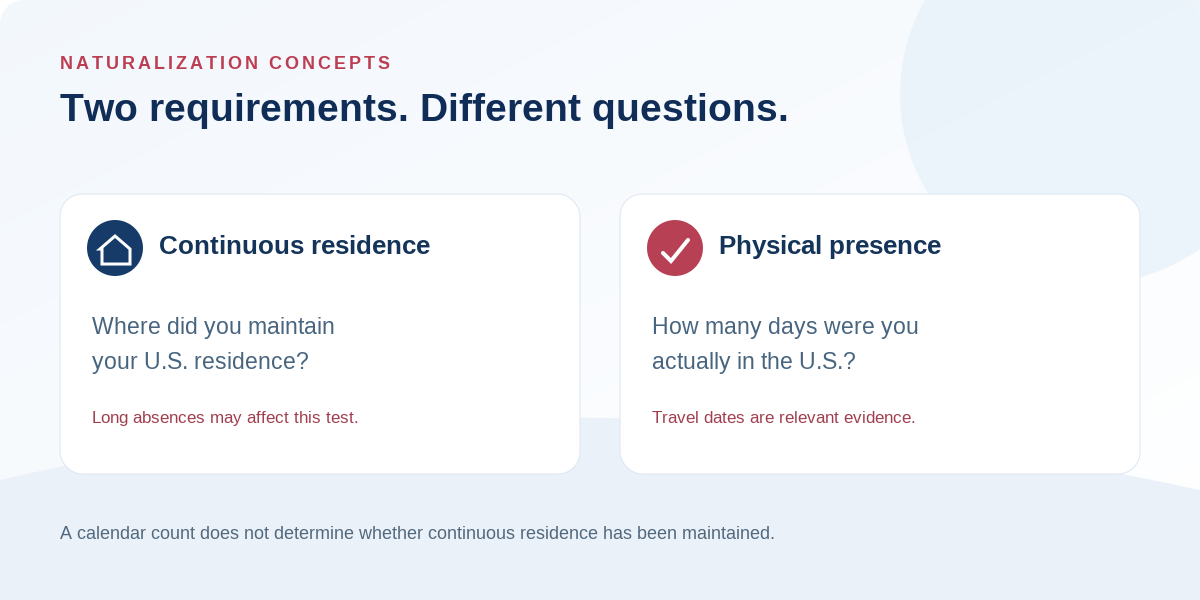
Travel can also affect eligibility for naturalization. Continuous residence and physical presence are distinct concepts, and the rules for citizenship are not identical to the rules for maintaining lawful permanent residence.
A personal travel-days worksheet can help organize historical dates, but it cannot decide whether naturalization eligibility or continuous residence has been maintained.
Planning a longer stay abroad
Before leaving, review whether a reentry permit or other authorization may be appropriate, how USCIS applications in progress may be affected, and which evidence or notices should be retained. No single checklist covers every status or case.
If documents are lost abroad, consult current guidance from the relevant U.S. authorities rather than relying on a generic online replacement procedure.
Steps to review
Use this sequence to organize research. The official agency instructions, not this checklist, control filing requirements.
- 01Review the expected absence and residence plans
Consider trip duration, permanent home and existing immigration obligations.
- 02Check current reentry documentation rules
Consult USCIS guidance on the Green Card and I-131 where relevant.
- 03Separate resident-status and citizenship questions
Naturalization can have distinct continuous-residence and physical-presence standards.
- 04Keep a reliable travel history
Record dates and preserve documents for future immigration applications.
- 05Seek case-specific review when needed
Complicated travel or past immigration issues may require qualified legal advice.
Frequently asked questions
Can a Green Card holder travel outside the United States?
Generally yes, but travel-document rules, duration and maintaining residence can matter.
Does returning once every year guarantee I keep permanent residence?
No. Absences and evidence of where the person actually lives can raise legal questions beyond a simple annual visit.
Does a reentry permit guarantee admission?
No. Admission is still subject to applicable law and the individual's circumstances.
Educational information, not legal advice. Immigration laws, agency policies, form editions and deadlines can change. This article does not determine your eligibility. For an individual legal matter, seek help from a qualified U.S. immigration attorney or accredited representative.
Official sources & further reading
Check these original government pages for current instructions, dates and requirements.
Agency reference pages and core concepts were checked on November 23, 2026. This does not indicate review or approval by a licensed attorney.